Piniberaliya - Endemic Tree of Sri Lanka
Scientific Name: Doona ovalifolia
Family: Dipterocarpaceae
Origin: Endemic to Sri Lanka
Pini Beraliya (Doona ovalifolia) was listed as extinct in the wild in Sri Lanka’s 2012 National Red List. However, subsequent discoveries of remnant populations at three locations (Ayagama in 2020, Kelin Kanda in 2023, and Wewella) within the wet zone have offered renewed hope for its survival.
Appearance and Characteristics
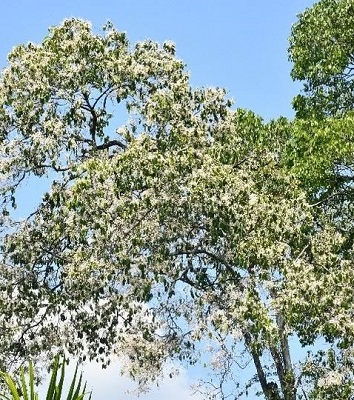
- A rare, large evergreen tree endemic to Sri Lanka reaching 16m to 18m tall, belonging to the Dipterocarpaceae family and associated mainly with the wet-zone rainforests.
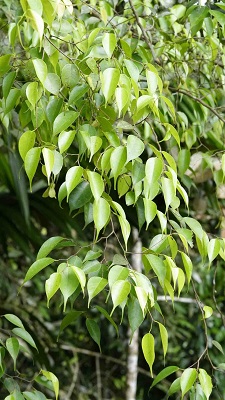
- Has distinctive ovate to elongated, long-pointed leaves, which are one of the useful features for identifying the species.
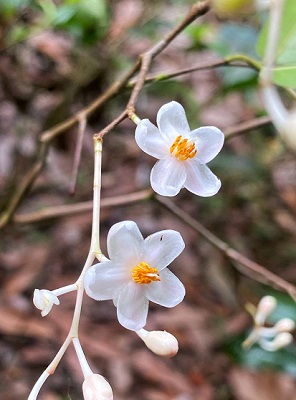
- Produces small, attractive white flowers, with flowering playing an important role in confirming the identity of the species during its rediscovery.
- It is particularly associated with moist habitats along streams and riverbanks in Sri Lanka's wet zone.
- Like other dipterocarps, Doona ovalifolia produces winged fruits adapted for wind dispersal.
- Today, its greatest value is as a rare genetic resource and an important species for rainforest restoration and conservation.
- Its strong association with streams and riverbanks makes protection of riparian rainforest habitat particularly important for its long-term survival and natural regeneration.
- The remarkable rediscovery of Pini-Beraliya also demonstrates the importance of community involvement, botanical research and habitat protection in preventing the extinction of rare rainforest species.