Daminna (දමින්න) – Native Wild Fruits of Sri Lanka
Among Sri Lanka's forests are many native fruits that have been enjoyed by local communities for generations but are now little known outside rural areas. Daminna (දමින්න), also known as Damunu (දමුණු), is one of these lesser-known wild fruits.
Scientifically known as Grewia tiliifolia, Daminna is a native Sri Lankan tree. It is found naturally in parts of Sri Lanka's low-country forests and extends into lower elevations of the montane region.
Unlike commercially cultivated fruits such as mango, banana and papaya, Daminna is an example of Sri Lanka's underutilized native food plants—species that form part of the country's natural and cultural heritage but receive relatively little attention today.
The Daminna Tree
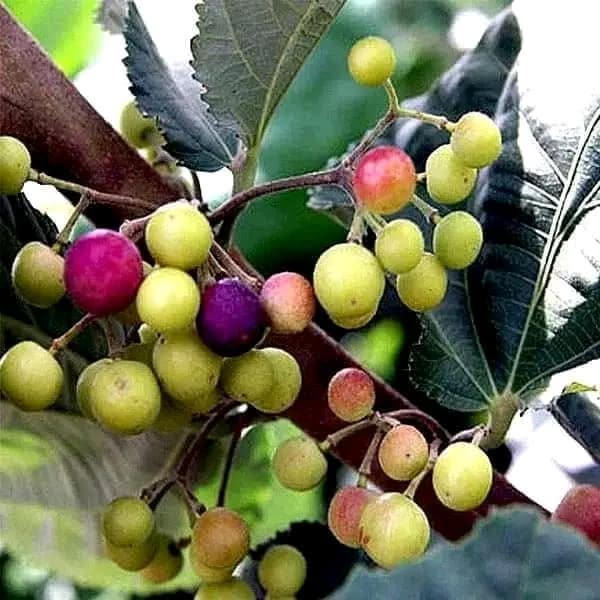
Daminna is a medium-sized tree with simple, broad leaves and small flowers. The leaves are generally oval to almost rounded, with serrated margins and prominent veins. The tree produces small, rounded fruits that develop in clusters. The fruits are approximately 2 cm in size and have a hard, multi-celled stone. The flowers are generally pale yellow and occur in small clusters. Traditional botanical records from Sri Lanka indicate a flowering period roughly between April and July.
Where Does Daminna Grow in Sri Lanka?
Grewia tiliifolia is a native species of Sri Lanka and occurs primarily in low-country forests and other natural habitats, extending into lower montane areas. Historical botanical records have documented the species from several parts of Sri Lanka, including areas around Batticaloa, Uma Oya, Kekirawa, Dambulla and Bibile. Its presence in different parts of the island reflects the diversity of habitats in which Sri Lanka's native trees and wild food plants occur.
Daminna – A Wild Edible Fruit
The small fruits of Daminna are edible and have traditionally been recognized as a wild food. Modern research into Sri Lanka's neglected and underutilized fruit species has included Grewia tiliifolia among the country's lesser-known fruit resources. For generations, wild fruits such as Daminna would have formed part of the relationship between rural communities and the forest. Such plants are important not only as potential food resources but also as part of Sri Lanka's traditional knowledge and biological heritage. Today, many younger generations may be unfamiliar with these native fruits. Learning about them is one way of reconnecting people with Sri Lanka's forests.
Traditional Uses
Daminna has a long history in Sri Lankan traditional medicine. Historical medicinal plant literature records traditional uses of different parts of Grewia tiliifolia. The plant has traditionally been described as having astringent and cooling properties and has been used in traditional preparations for certain digestive ailments. These uses form part of Sri Lanka's traditional indigenous knowledge. Traditional medicinal use should not, however, be interpreted as modern medical evidence. Scientific research is required to establish the safety and effectiveness of any medicinal preparation.
Daminna and Wildlife
Native fruiting trees can also contribute to forest ecosystems by providing food resources for wildlife. Species of Grewia are known to have interactions with wildlife in their natural ranges, including animals that consume their fruits and other plant parts. The ecological relationships of Daminna in different Sri Lankan forests deserve further study. Documenting which birds, mammals and other animals use its fruits can help us better understand the role of lesser-known native trees in Sri Lanka's forest ecosystems.
The Daminna Tree
Daminna is a medium-sized tree with simple, broad leaves and small flowers. The leaves are generally oval to almost rounded, with serrated margins and prominent veins. The tree produces small, rounded fruits that develop in clusters. The fruits are approximately 2 cm in size and have a hard, multi-celled stone. The flowers are generally pale yellow and occur in small clusters. Traditional botanical records from Sri Lanka indicate a flowering period roughly between April and July.
Where Does Daminna Grow in Sri Lanka?
Grewia tiliifolia is a native species of Sri Lanka and occurs primarily in low-country forests and other natural habitats, extending into lower montane areas. Historical botanical records have documented the species from several parts of Sri Lanka, including areas around Batticaloa, Uma Oya, Kekirawa, Dambulla and Bibile. Its presence in different parts of the island reflects the diversity of habitats in which Sri Lanka's native trees and wild food plants occur.
Daminna – A Wild Edible Fruit
The small fruits of Daminna are edible and have traditionally been recognized as a wild food. Modern research into Sri Lanka's neglected and underutilized fruit species has included Grewia tiliifolia among the country's lesser-known fruit resources. For generations, wild fruits such as Daminna would have formed part of the relationship between rural communities and the forest. Such plants are important not only as potential food resources but also as part of Sri Lanka's traditional knowledge and biological heritage. Today, many younger generations may be unfamiliar with these native fruits. Learning about them is one way of reconnecting people with Sri Lanka's forests.
Traditional Uses
Daminna has a long history in Sri Lankan traditional medicine. Historical medicinal plant literature records traditional uses of different parts of Grewia tiliifolia. The plant has traditionally been described as having astringent and cooling properties and has been used in traditional preparations for certain digestive ailments. These uses form part of Sri Lanka's traditional indigenous knowledge. Traditional medicinal use should not, however, be interpreted as modern medical evidence. Scientific research is required to establish the safety and effectiveness of any medicinal preparation.
Daminna and Wildlife
Native fruiting trees can also contribute to forest ecosystems by providing food resources for wildlife. Species of Grewia are known to have interactions with wildlife in their natural ranges, including animals that consume their fruits and other plant parts. The ecological relationships of Daminna in different Sri Lankan forests deserve further study. Documenting which birds, mammals and other animals use its fruits can help us better understand the role of lesser-known native trees in Sri Lanka's forest ecosystems.